
McMaster Experimental and Computational Aerodynamics Laboratory
Research
The McMaster Experimental and Computational Aerodynamics Laboratory (MECA) Laboratory investigates both fundamental and applied fluid flow problems. We use novel experimental and computational techniques to explore challenges related to unsteady aerodynamics, fluid-structure interactions, flow estimation, and fundamentals of turbulence. Our research contributes to a wide range of applications including aerospace engineering, sustainable energy harvesting technologies, and intelligent and autonomous systems.
We apply a variety of optical diagnostics and fluid measurement techniques to characterize complex fluid motion. Flow decomposition (e.g., Proper Orthogonal Decomposition (POD), Spectral-POD) and machine learning methods are employed to understand the evolution of coherent flow structures. For details on our experimental facilities, please visit our research facility page.
Research Highlights
Sensor-based flow estimation and nonlinear control
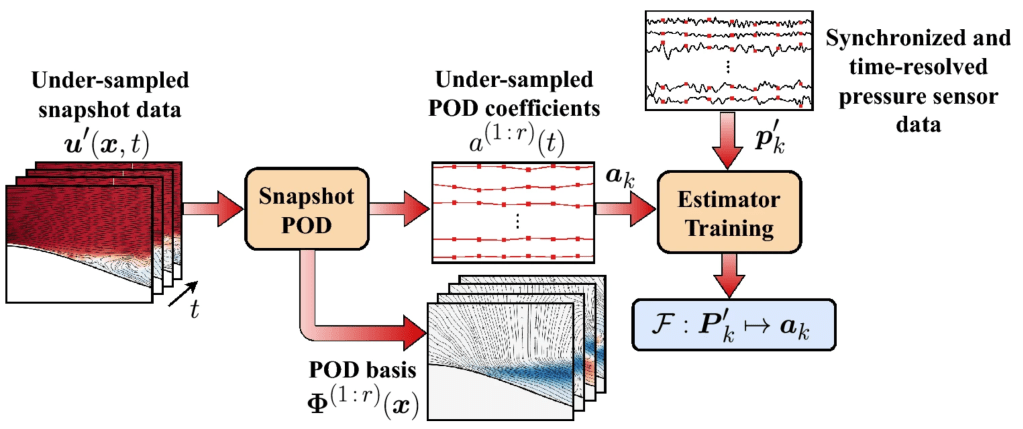
Temporal super-resolution using smart sensors for turbulent separated flows
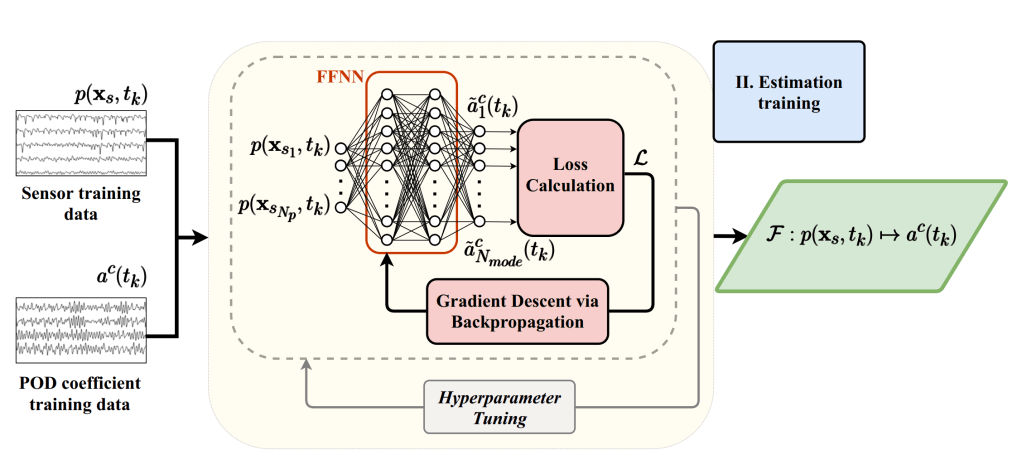
Sparse sensor-based cylinder flow estimation using artificial neural networks
Fluid-structure interactions and vortex dynamics
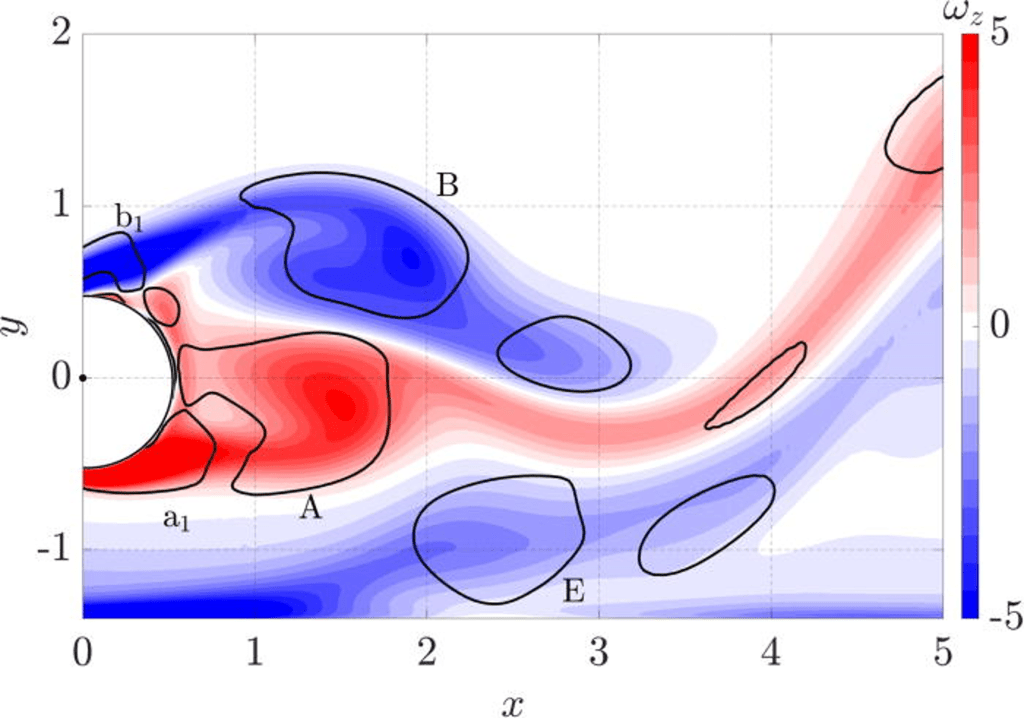
Relationship between wake and cylinder dynamics for a cylinder undergoing modulated vortex induced vibrations
Unsteady aerodynamics of bluff and streamline bodies
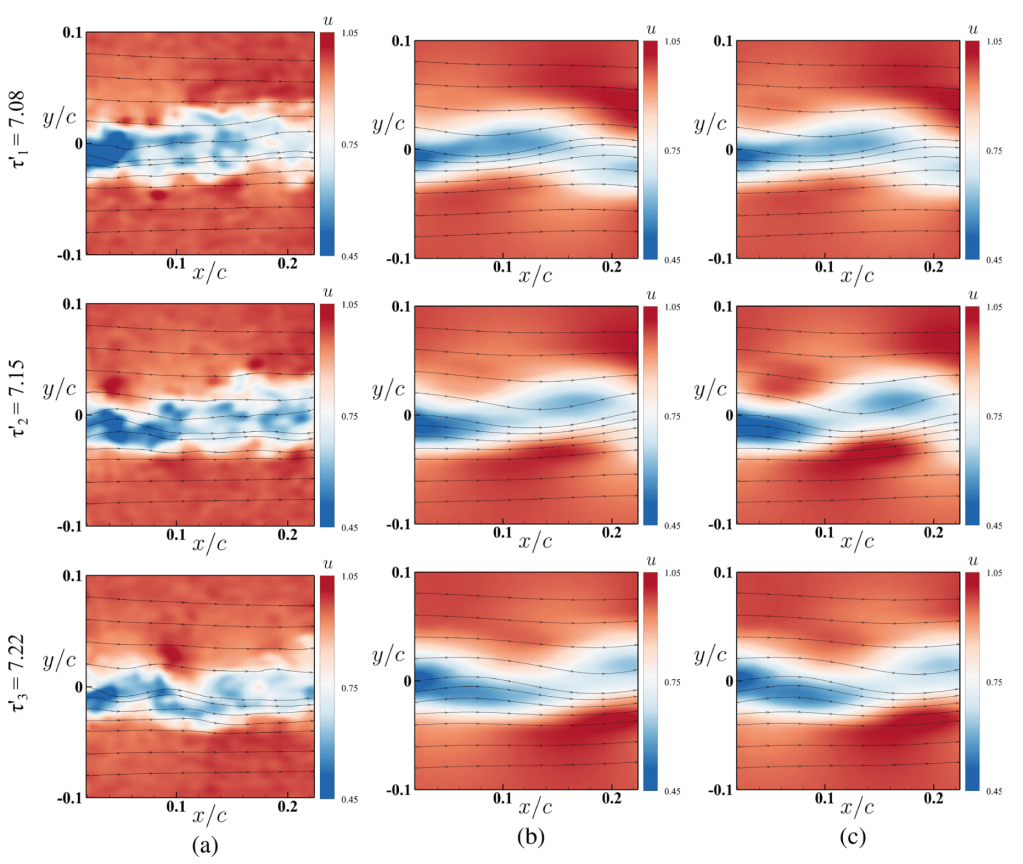
 MECA-LAB