
McMaster Experimental and Computational Aerodynamics Laboratory
Experimental Facilities
The MECA Lab is equipped with a range of advanced experimental facilities designed to investigate fundamental and applied problems in fluid mechanics. Our setups support high-resolution, time-resolved measurements and are tailored to explore complex flow phenomena including turbulence, flow separation, and stratified shear flows. Central to our work are custom-built rigs that integrate optical diagnostics such as Particle Image Velocimetry (PIV), Laser-Induced Fluorescence (LIF), and high-speed imaging.
These facilities enable controlled, repeatable experiments at both laboratory and large-scale, allowing us to validate models, study flow physics in detail, and collaborate across disciplines and institutions. We continually refine and develop our setups to meet the evolving demands of our research and to support student-driven innovation in experimental design.
Facility Highlights
Recirculating Water Tunnel
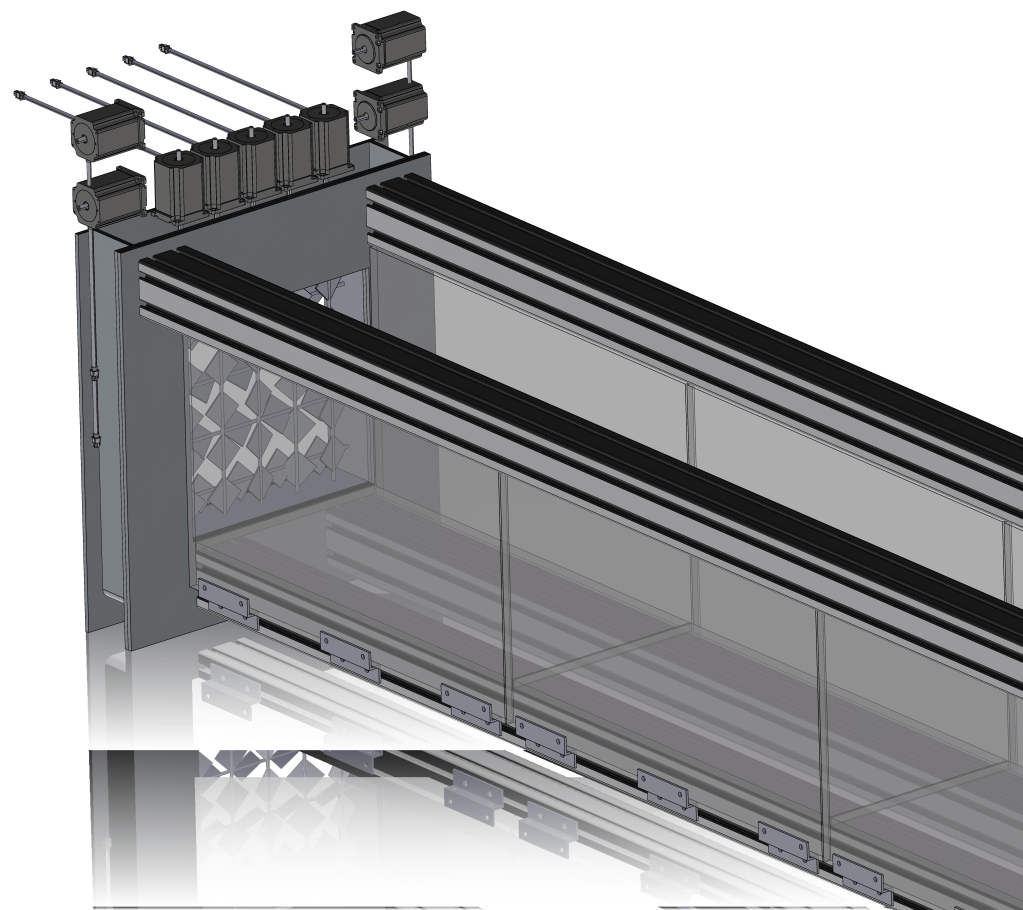
This custom recirculating water tunnel supports high-precision studies of laminar, transitional, and turbulent flows. It features a 0.4 m × 0.4 m × 2 m test section with a 4:1 contraction and delivers flow speeds up to 1 m/s with fine control. A modular inlet allows for the installation of a removable active grid, enabling tunable inflow turbulence. This flexibility makes the facility ideal for investigating flow instabilities, mixing behavior, and the influence of controlled perturbations on turbulence development.
Immersion Heater Flow Loop
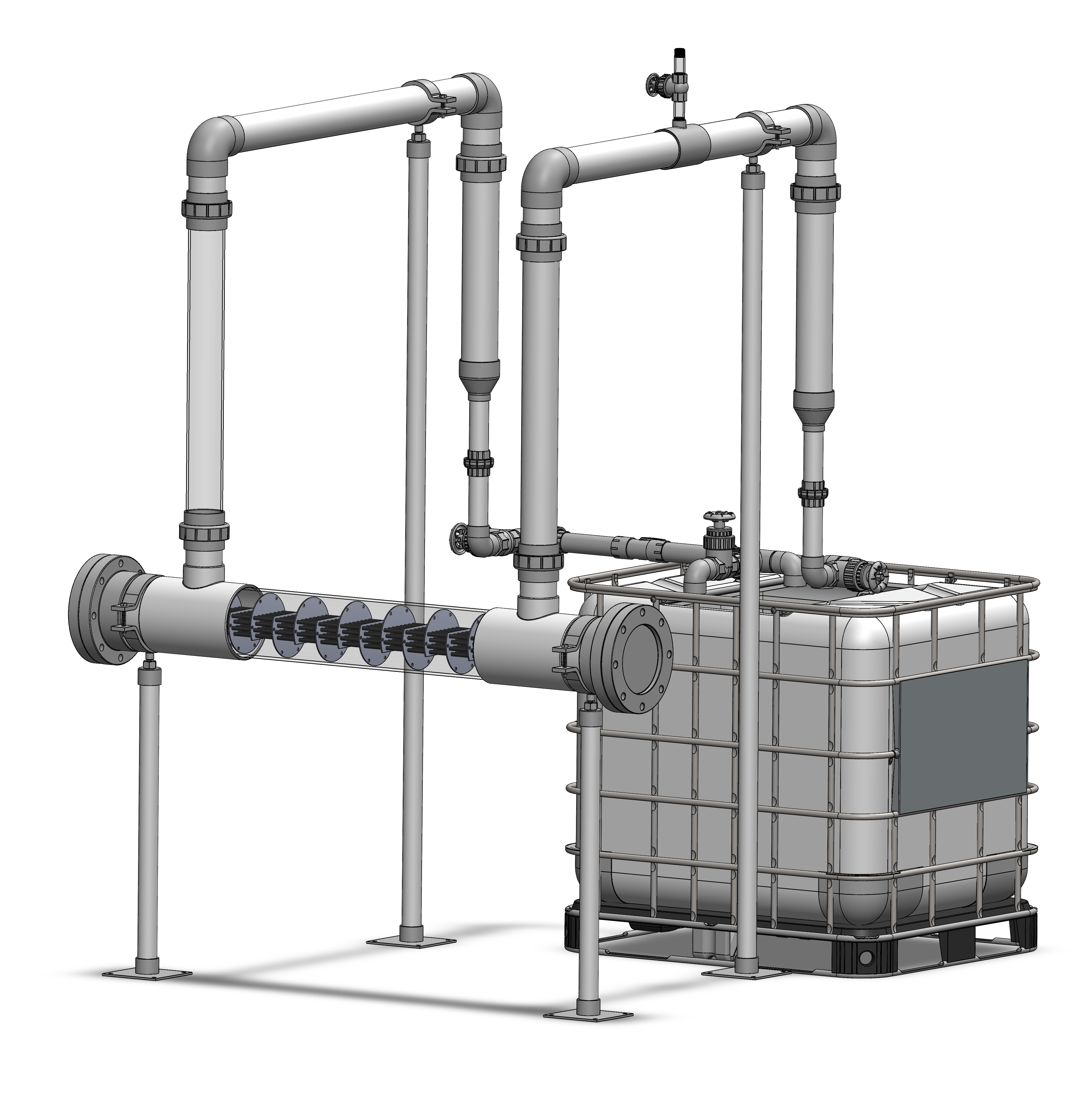
This experimental platform was developed to investigate turbulent cross-flow in industrial rod-baffle heat exchanger geometries. The system features a full-scale transparent acrylic vessel equipped with interchangeable rod bundles and segmental baffles. A closed-loop water flow system delivers controlled, single-phase, fully developed turbulent flow through the test section. Refractive index-matched materials (acrylic and FEP) allow for undistorted optical access, enabling planar particle image velocimetry (PIV) across multiple r–z planes. The setup supports modular testing of various rod and baffle configurations and serves as a benchmark platform for validating CFD simulations under industrially relevant conditions.
Open Jet Wind Tunnel
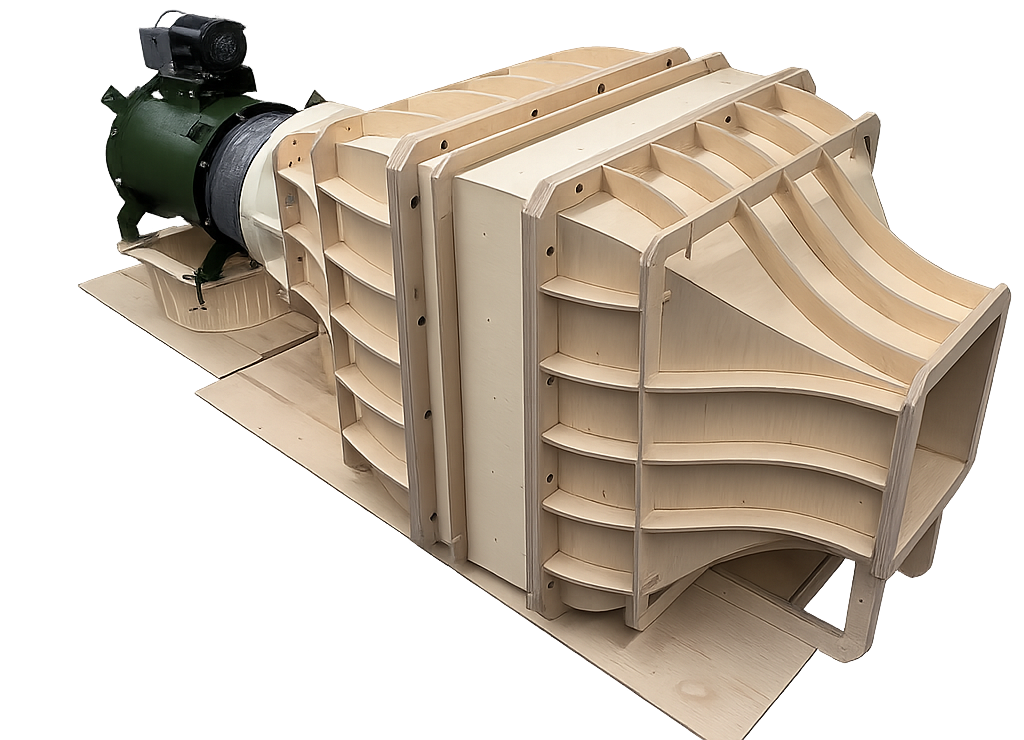
This custom low-speed wind tunnel was designed and constructed to support a range of experimental aerodynamic studies. It features an open test section and a blower-style configuration with an operational range of 5 to 15 m/s with low turbulence intensity. The compact tunnel is currently used for undergraduate labs, capstone design projects, and is slated to support future research projects.
Stratified Planar Jet
This custom-designed facility enables controlled studies of shear-driven mixing in stably stratified environments. A high-aspect-ratio planar jet issues into a quiescent tank with adjustable density stratification, allowing precise control of Reynolds and Richardson numbers to explore a wide range of flow regimes. The system is optimized for synchronized Particle Image Velocimetry (PIV) and Planar Laser-Induced Fluorescence (PLIF) measurements, enabling detailed investigations of velocity–scalar coupling, instability growth, and entrainment dynamics across different stratification strengths.
 MECA-LAB